
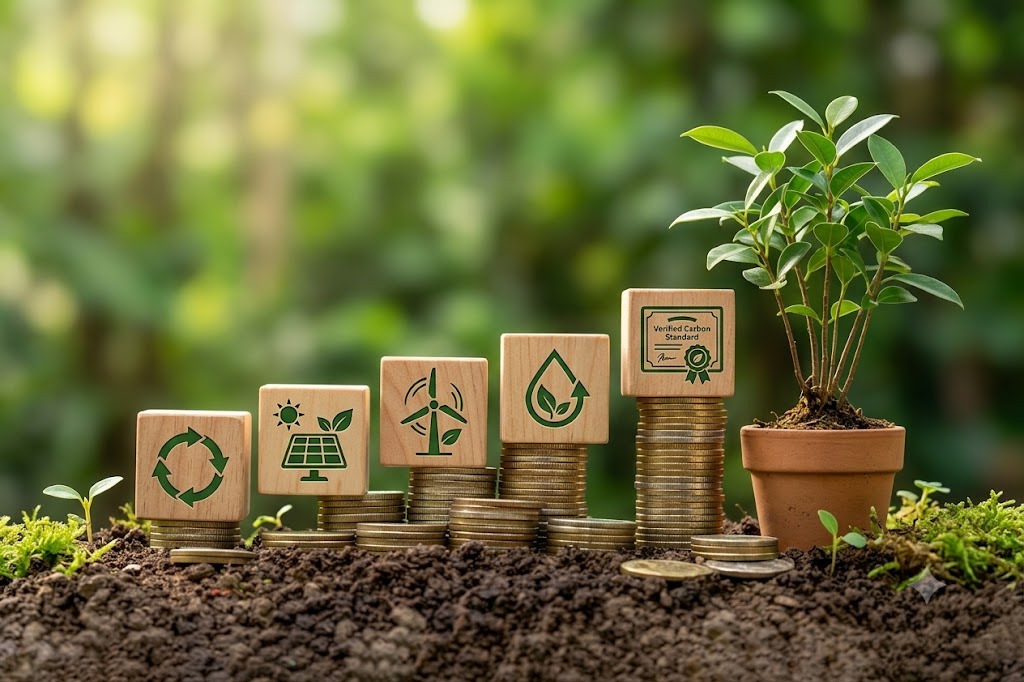
The global push toward net-zero emissions has turned carbon credits from a niche compliance tool into one of the fastest-growing markets in the sustainability economy. Whether you’re a business exploring ESG compliance, a company chasing carbon neutrality, or an investor evaluating the voluntary carbon market, understanding how carbon credits work is now essential.
What Are Carbon Credits?
A carbon credit is a certified, tradable unit representing one metric ton of carbon dioxide (CO2) — or its equivalent in other greenhouse gases — either avoided, reduced, or removed from the atmosphere. Companies and individuals purchase carbon credits to offset their carbon footprint, meet emission reduction targets, or support climate action projects such as reforestation, renewable energy, methane capture, and clean cookstove initiatives.
How Do Carbon Credits Work?
Carbon credits are generated when a verified emission-reduction project demonstrates measurable, additional climate impact — meaning the reduction wouldn’t have happened without the project. Independent registries such as Verra (VCS), Gold Standard, and the American Carbon Registry (ACR) audit and certify these projects before issuing tradable carbon credits. Once verified, these credits can be bought, sold, or retired in the carbon credit market.
Types of Carbon Markets
- Compliance Carbon Market — Government-regulated systems like the EU Emissions Trading System (EU ETS) and California Cap-and-Trade, where industries are legally required to offset emissions.
- Voluntary Carbon Market (VCM) — Where businesses and individuals voluntarily purchase carbon offsets to meet ESG goals, corporate sustainability commitments, or net-zero pledges.
Why Businesses Are Buying Carbon Credits
- Meeting ESG and sustainability reporting requirements
- Achieving carbon neutral or net-zero emissions targets
- Strengthening brand reputation and green credentials
- Complying with emerging carbon regulations and climate disclosure laws
- Attracting climate-conscious investors and customers
Types of Carbon Credit Projects
- Afforestation and reforestation carbon credits
- Renewable energy carbon credits (solar, wind, biomass)
- Methane capture and landfill gas projects
- REDD+ (forest conservation) credits
- Direct air capture (DAC) and technology-based carbon removal
- Biochar and soil carbon sequestration credits
Carbon Credit Pricing: What Affects Cost
Carbon credit prices vary widely based on project type, registry, vintage year, and quality rating. High-integrity, verified carbon credits from reputable registries command a premium over lower-quality avoidance credits. Prices can range from a few dollars per tonne for basic offset projects to several hundred dollars per tonne for high-integrity removal credits like direct air capture or enhanced rock weathering.
How to Buy or Sell Carbon Credits in Bulk
For businesses looking to buy carbon credits in bulk or sell verified carbon credits at scale, working with an established carbon credit marketplace, exchange, or broker ensures transparent pricing, verified documentation, and secure transactions. Bulk carbon credit transactions typically involve registry verification, vintage confirmation, and quality assurance to ensure long-term climate impact.
The Future of Carbon Trading
As global carbon regulations tighten and more companies commit to net-zero targets, demand for high-quality, verified carbon credits is expected to rise steadily. Businesses that act early — securing reliable carbon credit supply and building carbon offset strategies — will be better positioned for long-term compliance and sustainability leadership.
Looking to buy or sell carbon credits in bulk?
We work with verified, registry-certified carbon credit projects across renewable energy, forestry, and emission reduction categories. Get in touch with our team to discuss your carbon credit requirements, pricing, and available inventory.